









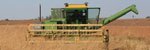
Income from the 600 acres of restored grassland and wetlands on the Prairie Farm comes in a variety of forms: sale of native plant seed, hay, and forage for cattle. We anticipate additional income streams in the near future.
Hay
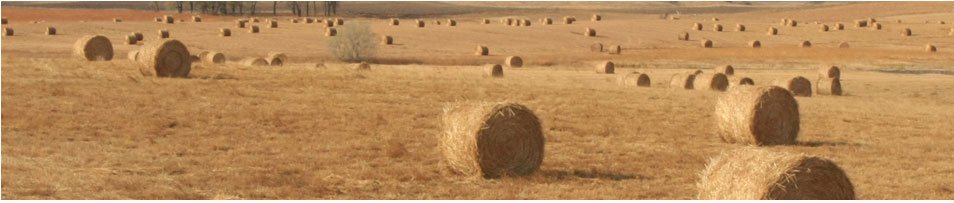
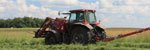
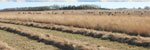
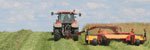
Two types of hay are cut, baled, and sold currently: summer-cut big
bluestem hay sold to be fed directly to cattle and dormant season hay (a
wide range of species) cut in the fall and sold to be ground and mixed
with other materials (e.g., distiller’s grains) before feeding to
cattle. Protein content of the summer hay ranges from 8-10 % with
relative feed value (RFV) scores of about 75. Cattle gain well on the
summer bluestem hay and find it highly palatable. In 2012, we sold 564
large round bales of hay to customers.
Seed
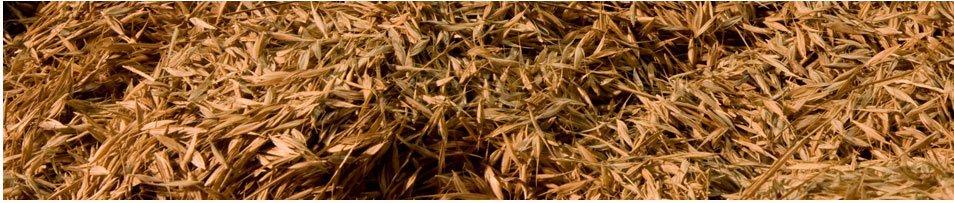
Native plant seed is currently an important source of income for the
Prairie Farm. Two new varieties of native grasses (Prairie Farm
wedgegrass and Prairie Farm cordgrass) are produced only on the Prairie
Farm and marketed through Millborn Seed in Brookings (View Wedgegrass Profile / View Prairie Farm Cordgrass).
The Prairie Farm also produces seed from switchgrass (NE 28, Summer,
and Sunburst varieties) and a range of wetland plants, particularly
sedges (smooth cone sedge, wooly sedge, and slough or wheat sedge).
About 8,000 total pounds of Prairie Farm seed (switch grass, prairie
cordgrass, and sedges) were marketed in 2012 through Millborn Seed
Company.
Prairie-Raised Beef
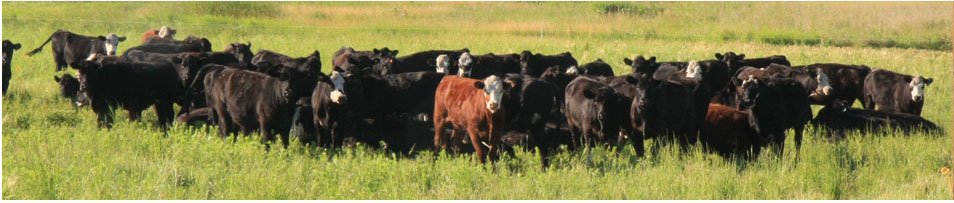
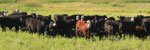
A herd of 75 cattle arrived on the Prairie Farm in May, 2013. These
Hereford x Angus crosses were born and raised their first year on the
Mortenson Ranch near Eagle Butte in western South Dakota. The Ranch won
the coveted Aldo Leopold Conservation award in 2011. The yearling
heifers were raised their second year entirely on our grassland until
being marketed as prairie-raised beef in late fall. We think that our
beef may be unique by being raised largely on warm-seson native grasses
like big bluestem, Indian grass, switch grass, and forbs (flowers) such
as Canada milk vetch and purple prairie clover. These were many of the
same plants that sustained the bison on the Great Plains for millennia.
Look for details in local newspapers and our website blog to find out
how to purchase our beef.
Future Income Sources

We anticipate additional sources of income from our grassland in the
near future. These likely new sources include the sale of hay as
cellulosic feedstock for biofuel (e.g., bio-oil); carbon credits as a
form of climate protection; ecotourism (including field classes in
prairie ecology); and fee hunting (large numbers of game birds are
produced naturally, not stocked, on the Prairie Farm).